Creature Studies
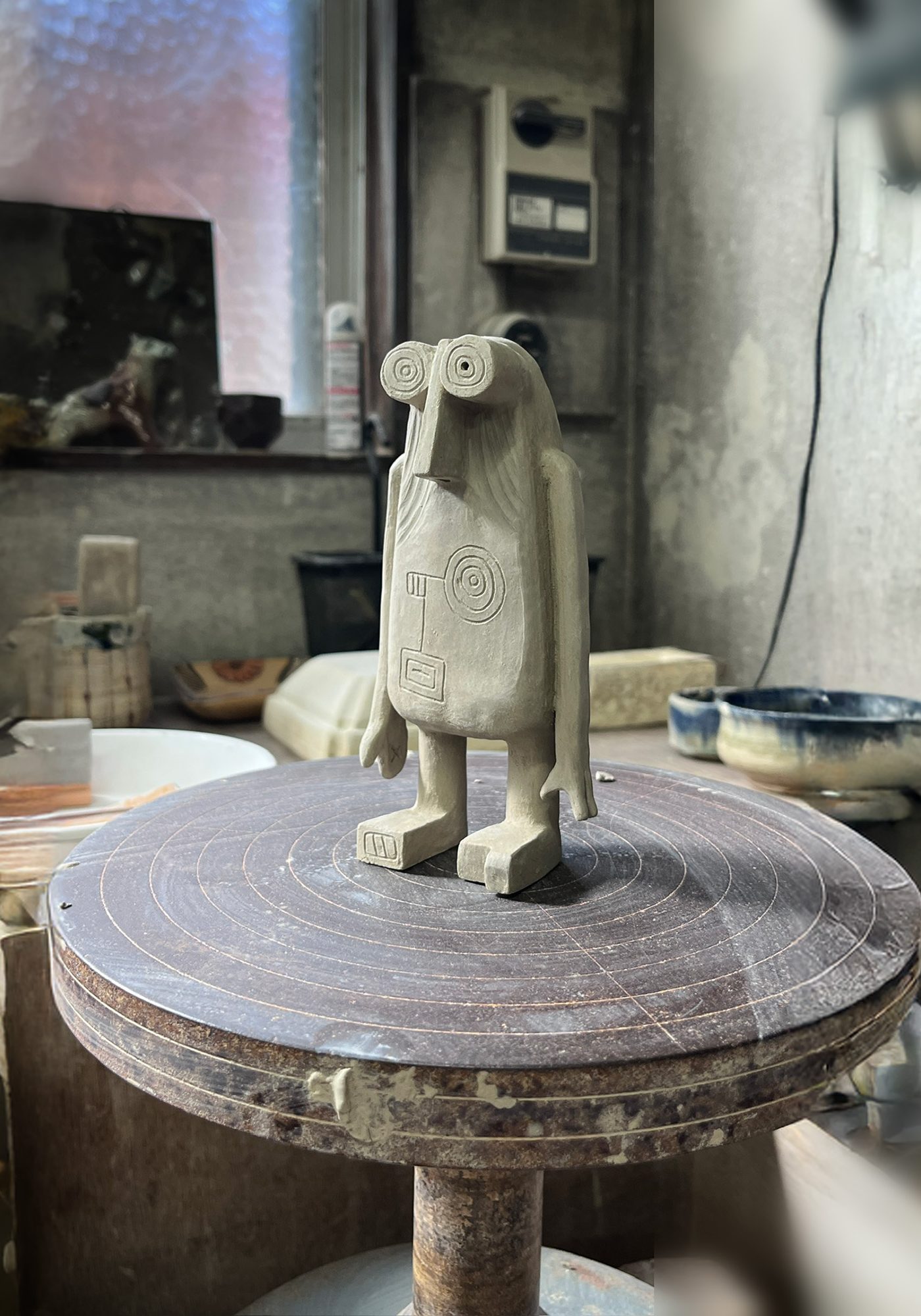
Creature Studies is a series of ceramic dolls that give form to behaviours absorbed before language. The creatures are not invented. They are observations of memory and the self. Each figure stands alone, fired in stoneware, intimate in scale. Each is accompanied by a short prose text that states what the creature cannot say itself. They carry a sense of familiarity, something approachable, even a little disarming. At this scale they feel close.
The current works function as maquettes, the first inhabitants of an interior world still being mapped. The longer project extends this into a larger scale, where the viewer is no longer looking down at the figures or able to hold them. These are dolls but not for play.
Creatures that carry a sense of familiarity, something approachable, even a little disarming.


Creature Study
2026
Stoneware, white glaze


Creature Study
2026
Stoneware, white glaze


Background
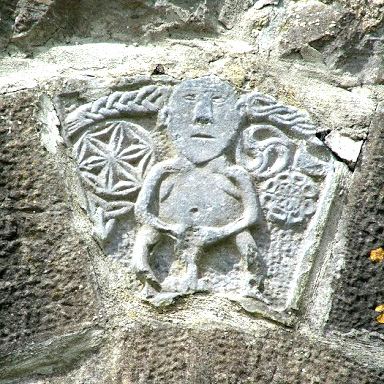
This work draws on early Irish stone carving, particularly figures found across Fermanagh, where I spent my childhood summers. These forms are direct and reduced, shaped more by instinct. We didn't understand what they were. In that way, they're much like the behaviours the work explores.
The carvings remain familiar, not as references but as something that's known and familiar. They hold a particular form: the weight, the stillness, the minimal features. They sit between human and symbolic, carrying presence without explanation.
This influence is not about replication. It is a shared way of forming. The figures I make try to draw on this same directness. The lineage includes Sheela-na-Gigs, with their unambiguous corporeal presence, and the spiralled geometry of the Newgrange entrance stone. These carvings share a method: reduction to essential form, marking thresholds, holding meaning in the shape rather than through ornament.
The hawthorn grows at these sites, marking thresholds and boundaries. In Irish tradition, it is a tree of protection and passage, associated with the fairy world and places where the ordinary and otherworldly meet. The presence of hawthorn at Caldragh and similar sites is not incidental. It reinforces the sense of these places as liminal spaces, where carved stone and living tree both carry memory and mark transition.